
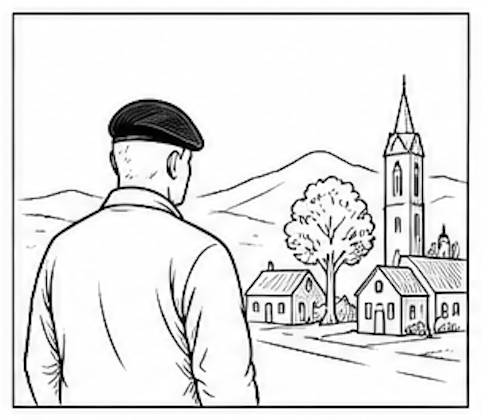
Operation Banner still sets the rules of war
The question is not only how Britain deals with the past. It is whether future soldiers can trust the state to stand behind lawful service when law, politics and hindsight move on.
Operation Banner is often treated as history.
For veterans, it is not so simple.
The way Britain now handles Northern Ireland legacy issues will help shape how future operations are understood, judged and remembered.
That is why Operation Banner still matters.
It is not only a past campaign.
It is precedent.
The pattern is familiar:
Operations conducted under government authority
Later legal frameworks reshaped by politics, litigation and human-rights interpretation
Repeated cycles of investigation, inquest and legal scrutiny
The gradual transfer of risk from the state to the individual
This is the central concern.
Not conviction alone.
Process.
Cases may collapse.
Evidence may fail.
Courts may acquit.
But the years spent under investigation still leave their mark: uncertainty, reputational damage, family strain, legal cost and welfare consequences.
The process itself can become the punishment.
This is why Northern Ireland legacy cannot be separated from wider defence policy.
Modern operations depend upon trust between the state and those it deploys.
The understanding has traditionally been simple enough: act within the rules as they exist at the time, and the state will stand behind you.
That understanding is now in question.
If serving personnel believe they may be judged decades later under altered legal and political conditions, behaviour changes.
Initiative narrows.
Risk tolerance falls.
Confidence weakens.
Some may decide that service is no longer worth the personal exposure.
That is not sentimentality.
It is a rational response to uncertainty.
Operation Banner therefore raises a live national-security question.
Can the United Kingdom maintain an effective fighting force while leaving those who served exposed to indefinite retrospective process?
The issue is not whether soldiers should be above the law.
They should not.
Nor is it whether serious wrongdoing should be ignored.
It should not.
The issue is whether lawful service can ever reach finality.
If the state sends people into danger, sets the rules, controls the policy and commands the operation, it cannot later shift the burden downward when the political climate changes.
That is risk relocation.
And it reaches far beyond Northern Ireland.
Drone operators, special forces personnel, intelligence officers, counter-terrorism units and conventional forces will all watch how Operation Banner veterans are treated.
The lesson they draw will matter.
Until Britain resolves the relationship between legal scrutiny, operational reality and state responsibility, Operation Banner will not remain in the past.
It will continue to set the rules.
READ NEXT
[ARCHIVE 00013]The risk does not disappear it settles downward
When institutions move on, the burden does not always vanish. Sometimes it settles onto those with the least control over the original decisions.
Tags
Future Operations
Risk Relocation
Finality Not Immunity