
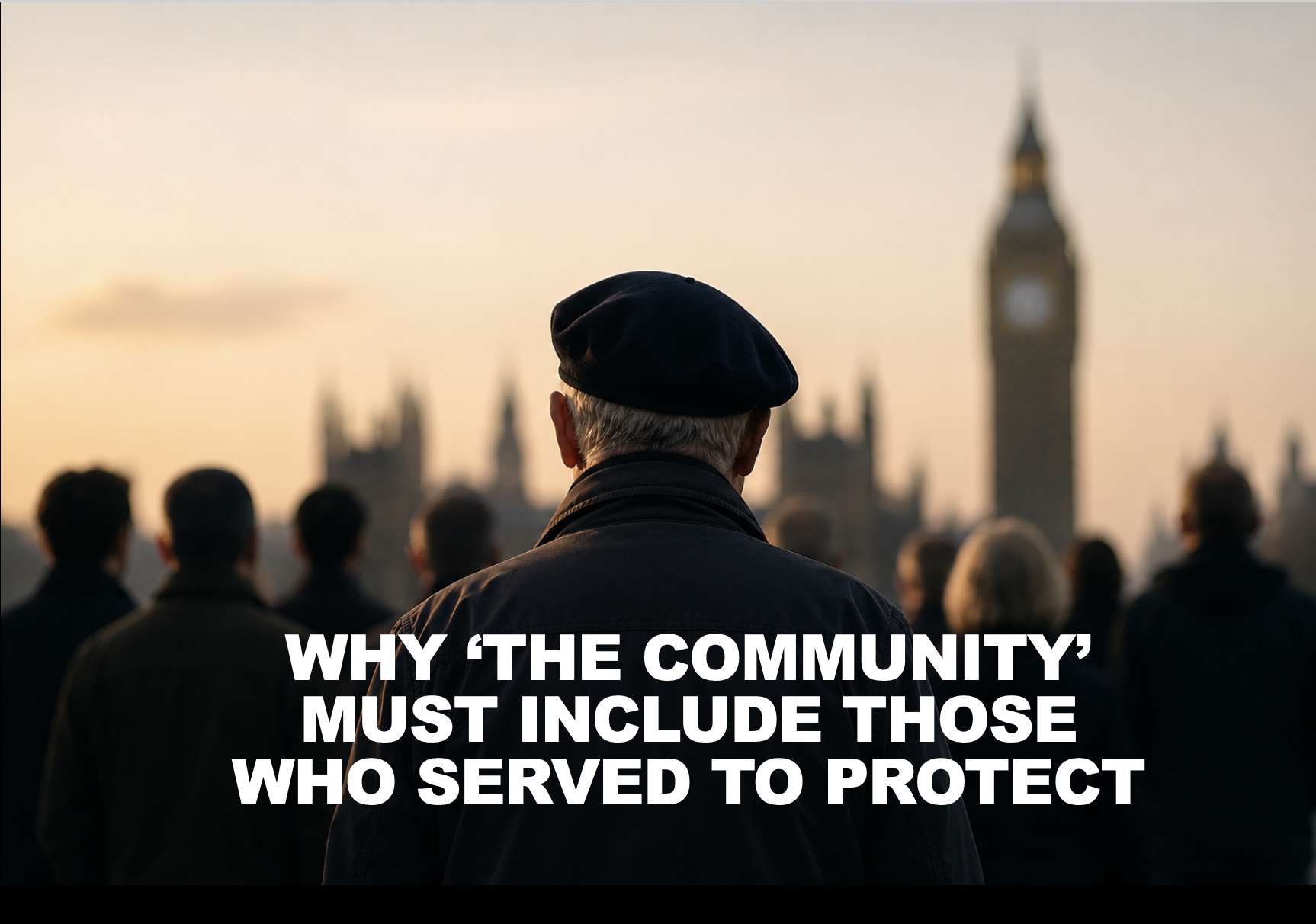
Andy Burnham, prime minister-in-waiting, will speak in parliament today for the first time since returning to the Commons. His theme? To pay tribute to the new ‘Hillsborough law’ as a model of redistributing power, according to the Times.
Burnham has described the Hillsborough Law as part of building "a Britain where every community is treated with equal respect" and where, in the face of injustice, "nobody walks alone."
It is a powerful idea.
If communities have been ignored by those in power, a healthy democracy should ask why. It should seek to understand what went wrong and ensure public institutions act honestly and transparently when things go badly.
But Burnham's words prompted a question that extends beyond Hillsborough.
Who counts as "the community"?
In public debate, we often speak of "the state" as though it were a single actor. In reality, the state is an abstraction. Governments change. Ministers come and go. Civil servants retire. Police officers leave the service. Soldiers return to civilian life.
Most of the people who once exercised the authority of the state are, today, simply citizens again.
Yet something curious often happens in public discourse.
Former public servants — particularly military veterans — can continue to be treated as though they remain part of the state itself. Their experiences are frequently viewed through the lens of institutional responsibility rather than community experience.
That distinction matters.
A veteran who served in Northern Ireland fifty years ago is not the Ministry of Defence. He is a citizen living in a community. His experience of repeated investigations, uncertainty or public controversy is not an institutional experience. It is a human one.
None of this diminishes the suffering of those affected by Hillsborough, Grenfell, the infected blood scandal or other public failures. Nor does it argue against accountability. Democracies depend upon institutions being answerable for their actions.
But accountability also requires precision.
If we are serious about listening to communities, we should be careful not to confuse institutions with the individuals who once served within them.
Perhaps that is one of the quieter challenges facing modern democracies.
We have become increasingly skilled at asking how institutions should answer for the past.
We are less accustomed to asking how those same institutions should relate to the citizens who once served them.
If every community deserves to be heard, that question deserves to be heard too.